How Proposed SNAP Cuts Could Reshape America’s Food Economy and Why AI-Powered Solutions Matter Now More than Ever

Quick answer
The Trump-aligned Republican administration announced its intention to significantly cut federal funding for the Supplemental Nutrition Assistance Program (SNAP). As a pillar of th
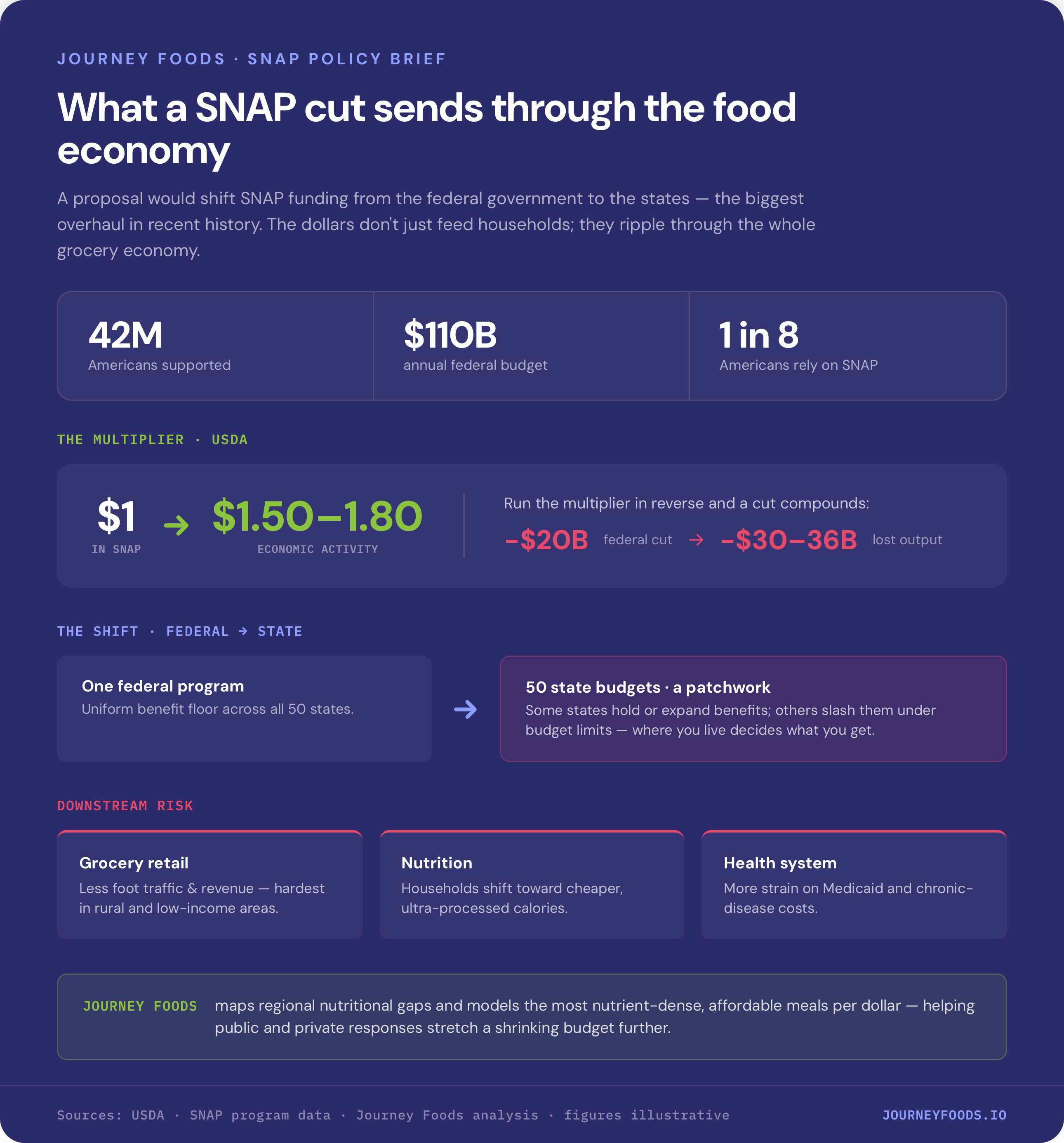
The Trump-aligned Republican administration announced its intention to significantly cut federal funding for the Supplemental Nutrition Assistance Program (SNAP). As a pillar of the U.S. social safety net, SNAP currently supports over 42 million Americans and operates with an annual budget of approximately $110 billion. These proposed changes would shift funding responsibility from the federal government to individual states, marking it as one of the most dramatic overhauls of the program in recent history.
SNAP: The Backbone of Food Security in America
SNAP plays an essential role in combating food insecurity in the US by offering monthly allotments to low-income households so that they can purchase groceries. These benefits help sustain a variety of people that includes both the unemployed and underemployed, as well as working families struggling with rising living costs. With roughly 1 in 8 Americans relying on SNAP, the program acts as both a social support mechanism and a key economic driver within the food retail ecosystem.
The Economic Implications of Federal Disengagement
If enacted, the proposed cuts would further destabilize the already precarious food security of millions. By offloading financial responsibility to the states, which can vary drastically due to resources and policy priorities, the federal government would effectively create a patchwork of support systems. Some states may maintain or even expand SNAP benefits while others could dramatically reduce them due to budget constraints, putting those that live in constrained states in a more vulnerable situation.
This decentralization poses serious economic risks:
- Consumer Spending Impact: SNAP injects billions into the food economy each month. USDA data shows that every $1 in SNAP benefits generates about $1.50 to $1.80 in economic activity. A $20 billion federal reduction could thus result in an estimated $30–36 billion loss in overall economic output.
- Grocery Retailers at Risk: Many supermarkets and local grocers rely heavily on SNAP transactions. A reduction in SNAP dollars would likely translate into decreased foot traffic and revenue, particularly in rural and urban low-income areas.
- Inflationary Pressure on Nutrition: With reduced benefits, lower-income households may shift to cheaper and ultra-processed foods, further amplifying public health concerns and placing greater strain on Medicaid and other healthcare costs.
Shifting Consumer Behaviors and Access to Nutrition
As benefits shrink, we’re likely to see rapid changes in consumer behavior. Families may:
- Prioritize caloric density over nutritional value.
- Reduce fresh produce and high-protein purchases.
- Turn to food banks and charitable organizations for support.
This could reverse gains made in improving national nutrition standards and exacerbate health disparities. Poor diet quality is already linked to increased incidence of obesity, diabetes, and cardiovascular diseases, all conditions that tend to often disproportionately affect low-income communities. Cutting SNAP would put these communities most at risk, calling into question, what can we do to help this failing?
Enter JourneyFoods: AI for Food Security and Sustainability
In a landscape increasingly defined by unpredictability, startups like JourneyFoods offer a glimpse of hope. By leveraging AI to optimize food formulation, sourcing, and distribution, JourneyFoods is creating tools that could be essential in adapting to the new SNAP reality.
JourneyFoods’ platform can help:
- Track regional nutritional gaps and predict emerging food access deserts.
- Model cost-effective, nutrient-rich alternatives that could be produced and distributed affordably at scale.
Inform food producers and suppliers about the most efficient ways to maintain food quality and accessibility within constrained budgets.
For example, if a certain state reduces its SNAP budget by 20%, JourneyFoods’ AI could help identify the most nutritionally dense and affordable meal solutions, potentially guiding both public and private sector responses.
As America potentially moves into a period of less public support for nutrition, the food and tech sectors must rise to the occasion. AI can serve as a bridge between economic necessity and public health, offering scalable solutions for maximizing impact per dollar spent.
The JourneyFoods approach exemplifies this. By analyzing global ingredient availability, price trends, and sustainability metrics, their platform enables companies to innovate within tight economic margins. In a post-SNAP-cut environment, this kind of intelligence isn’t just helpful—it’s essential.
Conclusion: Resilience Through Data and Innovation
The proposed SNAP cuts could redefine America’s food economy, particularly for its most vulnerable populations. With a potential reduction in $110 billion of federal investment, downstream effects on consumer spending, retail viability, and national health are inevitable.
But where there is risk, there is also opportunity. JourneyFoods and similar AI-driven platforms have the potential to reshape how we think about food security—not just as a welfare issue, but as a challenge that can be met with smart, sustainable innovation. In a time of unprecedented change, combining data science with mission-driven entrepreneurship might be our best bet for nourishing both the economy and the people it serves.
As published
$110
Data from this story
Shareable Journey Intelligence
How Proposed SNAP Cuts Could Reshape America’s Food Economy and Why AI-Powered Solutions Matter Now More than Ever
News & Events
$110
social safety net, SNAP currently supports over 42 million Americans and operates with an annual budget of approximately $110 billion .
$1
USDA data shows that every $1 in SNAP benefits generates about $1.50 to $1.80 in economic activity.