Quick answer
In an ever-changing landscape where consumer preferences evolve alongside technological advancements, food brands must lean on research-driven strategies to address growing demands for healthier options, sustainable practices, and deep brand loyalty. As seen with the rise of live streaming and other digital platforms, engagement is about creating immersive and transparent experiences. Here's how food brands can adapt and thrive by integrating insights from nutrition, sustainability, and audience engagement trends.
In an ever-changing landscape where consumer preferences evolve alongside technological advancements, food brands must lean on research-driven strategies to address growing demands for healthier options, sustainable practices, and deep brand loyalty. As seen with the rise of live streaming and other digital platforms, engagement is about creating immersive and transparent experiences. Here's how food brands can adapt and thrive by integrating insights from nutrition, sustainability, and audience engagement trends.
1. Leverage Transparency to Build Trust and Loyalty
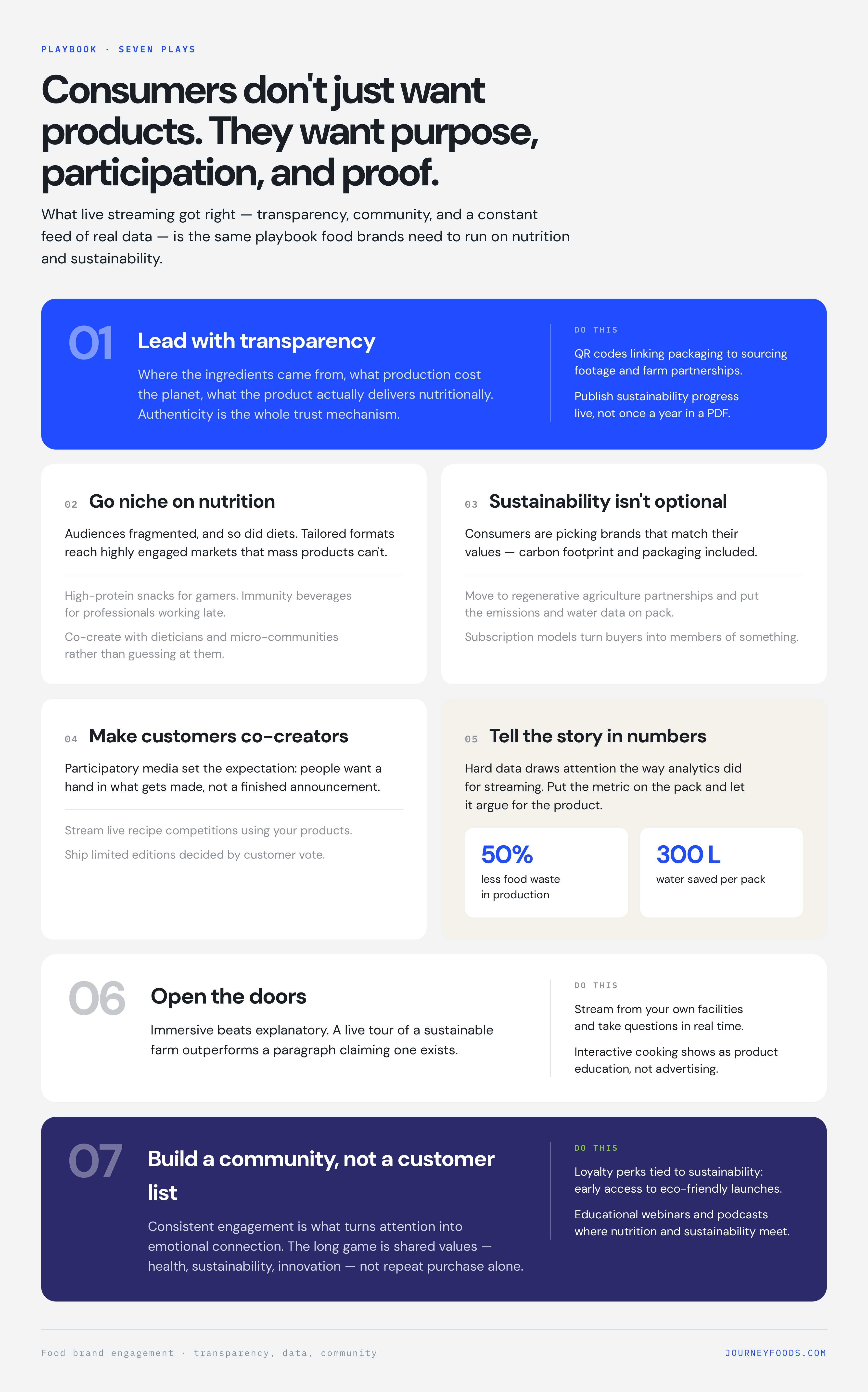
Just as live streamers like Kai Cenat captivate audiences through authenticity, food brands can foster loyalty by being transparent about their practices. Highlighting how ingredients are sourced, the environmental impact of production, and the nutritional value of products can resonate with consumers who prioritize ethics and health.
Action Steps:
- Develop QR codes on packaging that link to behind-the-scenes content showcasing sustainable sourcing or partnerships with local farms.
- Share progress on sustainability goals through live-streamed events or social media updates to foster real-time connections with your audience.
2. Invest in Niche Nutrition Trends
The decentralization of live-streaming platforms mirrors the growing demand for niche, personalized nutrition. Brands that offer tailored solutions—whether through functional foods, specialized diets, or innovative formats—can tap into highly engaged markets.
Examples:
- Introduce products for specific dietary needs (e.g., high-protein snacks for gamers or immunity-boosting beverages for busy professionals).
- Collaborate with dieticians, fitness influencers, and micro-communities to co-create products that address emerging nutrition trends like “cozy tech meals” or plant-based comfort foods.
3. Sustainability Is No Longer Optional
Just as platforms like Kick and YouTube Gaming are reshaping entertainment landscapes, sustainability is reshaping the food industry. Consumers are increasingly choosing brands that align with their values, including reduced carbon footprints and zero-waste packaging.
Action Steps:
- Transition to regenerative agriculture partnerships and feature the data—such as the reduction in carbon emissions or water usage—on packaging.
- Offer subscription-based models, akin to Rancho Gordo’s bean club, where sustainability-focused consumers can feel like part of an exclusive community driving positive change.
4. Adopt a Participatory Marketing Model
Live streaming’s popularity underscores the shift toward participatory media. Similarly, food brands can create campaigns where customers feel like co-creators or valued members of the journey.
Ideas to Try:
- Host live recipe competitions where customers use your products, and stream these events to showcase innovation in action.
- Develop limited-edition products based on consumer votes or insights gathered during interactive Q&A sessions about future launches.
5. Data-Driven Storytelling: Nutrition + Sustainability Metrics
Stream Hatchet’s analytics show the power of hard data in drawing attention to trends. Food brands can use data storytelling to make a compelling case for their products. For example, showcasing how a particular ingredient contributes to both better health and sustainability.
Implementation:
- Feature metrics like “50% reduced food waste in production” or “saves 300 liters of water per pack” directly on packaging or digital campaigns.
- Highlight stories of supplier partnerships, such as supporting smallholder farmers or preserving biodiversity in ingredient sourcing.
6. Experiment with Immersive Technology
With platforms like Netflix and YouTube investing in live-streaming, food brands can follow suit by offering immersive experiences. From live tours of sustainable farms to interactive cooking shows, the opportunities are endless.
Example:
A brand could stream live from their facilities, showcasing how sustainable methods are transforming the industry while allowing real-time viewer interactions.
7. The Long Game: Build Communities, Not Just Customers
Kai Cenat’s subathon exemplifies how engaging with an audience consistently builds emotional connection. Food brands can replicate this by creating online or offline communities centered around shared values like health, sustainability, or innovation.
Strategies:
- Launch a loyalty program with exclusive perks for sustainability-conscious consumers, such as early access to eco-friendly products or partnerships with local environmental initiatives.
- Develop educational content—webinars, eBooks, or podcasts—about the intersection of nutrition, sustainability, and lifestyle.
Closing Thoughts
The success of live streaming and community-driven platforms provides a powerful metaphor for how food brands can thrive. By blending transparency, innovation, and meaningful engagement, companies can ensure they stay relevant in a world where consumers demand more than just products—they seek purpose, participation, and trust.
Incorporating the lessons from nutrition science, sustainability research, and the psychology of brand loyalty isn't just an opportunity; it's a necessity. The brands that embrace this new era will not only survive but lead the charge in transforming the global food system for the better.
As published
50%
Data from this story
Shareable Journey Intelligence
How Food Brands Can Create Loyalty with Nutrition and Sustainability
News & Events
50%
Implementation: Feature metrics like “50% reduced food waste in production” or “saves 300 liters of water per pack” directly on packaging or digital campaigns.