
Quick answer
The highest-scoring fruits on this list — passion fruit (96), avocado (93), pomegranate (91), guava (90) — are also the least commoditized. That's not a supply chain problem. That's a white space. Brands that formulate around these ingredients now get to own the fiber story and the flavor novelty story simultaneously. Passion fruit fiber bars. Pomegranate-seeded snack clusters. Guava-based gummies with functional claims.
Most people think of fiber as a supplement aisle problem. It's not. It's a formulation problem, a sourcing decision, and for most CPG brands, a massive missed opportunity hiding in plain sight inside your ingredient catalog.
Here's the truth: the fruits with the highest fiber per serving are not the ones dominating product labels. They're the ones most brands overlook.
The Rankings: Fiber + Journey Foods Nutrition Score
19 fruits, ranked by fiber per serving.
A clean read of the produce aisle for R&D and formulation teams. Each fruit scored against a single Journey lens — fiber density, accessibility, glycemic load, and sustainability of supply. Passion fruit takes the top slot by a wide margin.
The full ranking.
Each fruit is scored from 0 to 100 against four equally-weighted pillars: nutrient density (fiber per 100g), supply stability (region of origin × seasonality), cost-in-use at formulation scale, and glycemic impact. Whole-fruit servings are normalized to 100g for comparability. Fiber values and scoring weights come from the Journey Foods internal ingredient database, May 2026 cut.

Journey Ingredient Intelligence
Passionfruit
Passion fruit takes the top slot by a wide margin.
A South American tree in the family Lecythidaceae.
The Undisputed King: Passion Fruit — 96/100
Passion fruit delivers 24g of fiber per cup — nearly triple what most people think of as a "high fiber" fruit. It also packs Vitamin C, magnesium, iron, and potassium with a relatively low glycemic impact, which is why it earns a near-perfect 96. Yet passion fruit barely shows up in U.S. CPG formulations. It's sourced globally, viable as a puree, powder, or concentrate, and carries a functional story most wellness brands would pay heavily to claim. Journey-Foods-2025-Blogs-67e9b15fc6176b9acdd9aff3.csv
The Podium: Avocado, Pomegranate, Guava
- Avocado — 93/100: 9–10g fiber per fruit, loaded with heart-healthy monounsaturated fats, folate, and potassium. No natural sugar to speak of. The fat profile alone pushes it to the top of the scoring range. Still massively underused outside guac and toast verticals.
- Pomegranate — 91/100: 11.3g fiber per whole fruit, extraordinary antioxidant density (punicalagins, ellagic acid), and a proven anti-inflammatory profile. The seeds alone pull 7g. The fiber angle is almost never the lead story — it should be.
- Guava — 90/100: Tropical, fragrant, legitimately high in fiber and Vitamin C — one cup exceeds your entire daily C requirement. Deeply underrepresented in U.S. ingredient databases despite being one of the most nutritionally complete fruits on this list.
The Berry Tier: Accessible, Antioxidant-Rich, Underscored

Journey Ingredient Intelligence
Avocado
Fruits ranked 19 From single-serve to whole-fruit Highest fiber 24g Passion fruit · 1 cup Median score 83 /100 Kumquat sits at the middle 90+ tier 4 Passion · Avocado…
A plant (Persea americana) high in healthy fats and nutritional value.
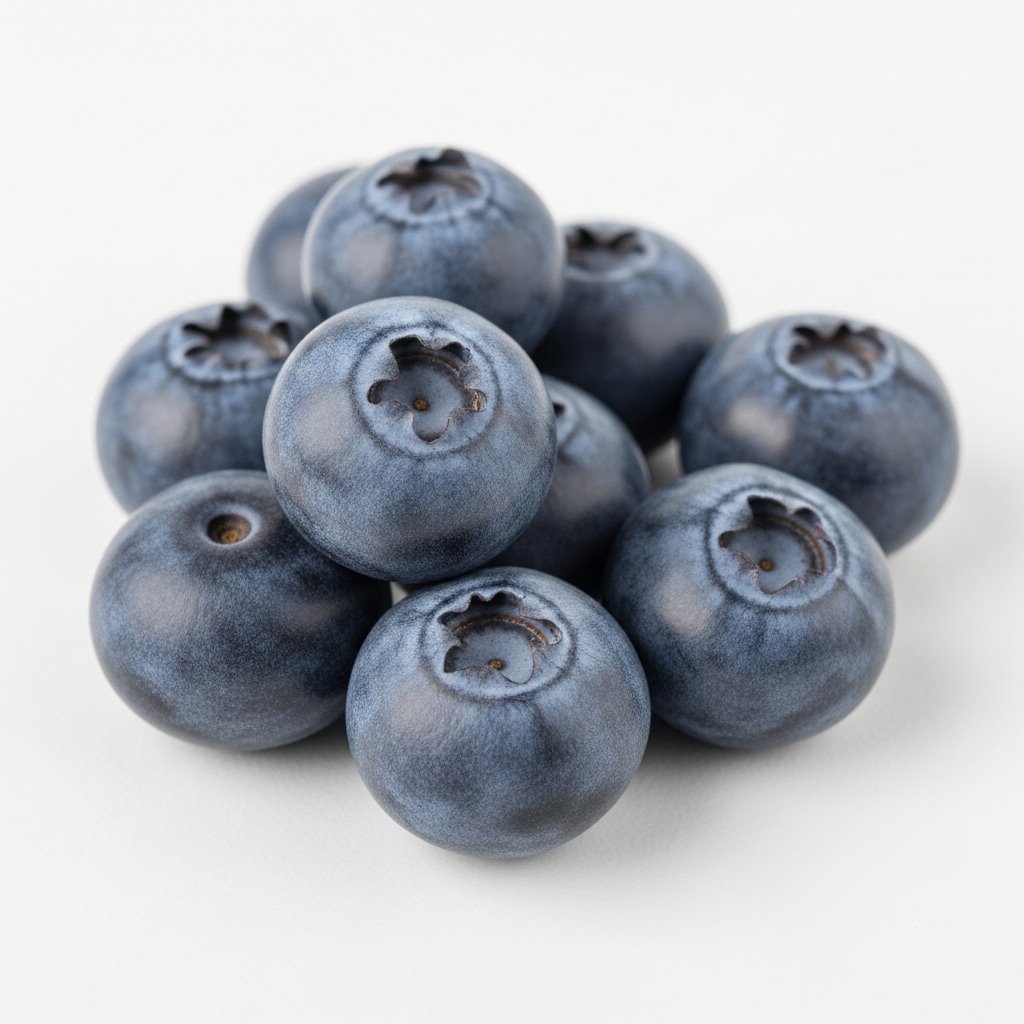
Raspberries (89), blackberries (88), and blueberries (85) form the most formulator-friendly cluster on this list — widely available, stable in multiple formats, and rich in polyphenols. The fiber content (7–8g for raspberries and blackberries) is rarely the lead claim, despite being competitive with far trendier ingredients. Blueberries score slightly lower (85) due to modest fiber relative to their sugar-to-fiber ratio, but their antioxidant density keeps them in the top tier.
The Formulation Trap: Whole vs. Juiced
Here's the data point that should change how you tag fruit ingredients in your catalog:
Fiber content drops to near-zero when fruit is juiced.
An orange (77/100 whole) falls to near 20/100 as a juice concentrate — it loses fiber entirely while retaining most of its sugar. The same applies across every fruit on this list. For food brands building nutrition-forward products:
- Purees, powders, and whole-fruit inclusions preserve fiber — juice concentrates don't
- "Made with real fruit" ≠ fiber content unless whole-fruit or fiber-retaining formats are specified
- This distinction should live as a data attribute in every ingredient entry — format matters as much as source
Journey Ingredient Intelligence
Blueberry
The Rankings: Fiber + Journey Foods Nutrition Score :root{--font-display:"Biotif","DM Sans",system-ui,-apple-system,sans-serif;--font-body:"Biotif","DM Sans",system-ui…
A South American tree in the family Lecythidaceae.
What This Means for Product Development
The highest-scoring fruits on this list — passion fruit (96), avocado (93), pomegranate (91), guava (90) — are also the least commoditized. That's not a supply chain problem. That's a white space. Brands that formulate around these ingredients now get to own the fiber story and the flavor novelty story simultaneously. Passion fruit fiber bars. Pomegranate-seeded snack clusters. Guava-based gummies with functional claims.
The ingredient intelligence is already here. The question is whether your formulation stack is set up to act on it.
Want to explore fiber-forward fruit ingredients for your next product? Journey Foods' ingredient catalog surfaces sourcing options, fiber data by format, and nutrition scoring — so your team moves from insight to formulation faster.
Let me know what you'd like to adjust — scores, tone, section order, CTA, or anything else.

Journey Ingredient Intelligence
Oranges
The Rankings: Fiber + Journey Foods Nutrition Score :root{--font-display:"Biotif","DM Sans",system-ui,-apple-system,sans-serif;--font-body:"Biotif","DM Sans",system-ui…
Dried berries from the Lycium barbarum plant.
Journey Ingredient Intelligence · Comparison
Passionfruit
Avocado
Data from this story